What is Balance Drawdown?
Balance Drawdown (BDD) measures the decline in an account's closed balance from its historical peak to a subsequent trough. It reveals the capital reduction caused by closed losing trades before the account establishes a new high.
Calculation formula
Drawdown at any balance trough is calculated as:
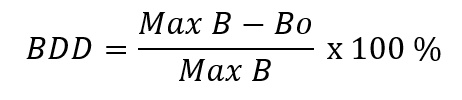
- BDD: The balance drawdown percentage (
%). - Max B: The highest historical balance peak (
$). - Bo: The lowest balance level reached during the pullback (
$).
Why Balance Drawdown matters
- Measures permanent loss: Balance drawdown reflects real, realized capital reduction. Unlike floating losses, balance drawdowns cannot recover without executing profitable new trades.
- Prop firm risk benchmarks: Proprietary trading evaluation challenges track balance drawdown thresholds to gauge strategy viability and money management discipline.
- Limitation: Balance drawdown only accounts for closed positions. A trader holding huge floating losses that eventually break even will show zero Balance Drawdown despite having endangered the entire account. To monitor real-time open-market risk, refer to Equity Drawdown.